
-
TSOS Short Intro to my Blog TheStoryofSelling FINAL
I have been a quota carrying sales guy now for over 35 years. I started out as a film major but joined a corporation and became a programmer…and technology became my field… but how to make more money? I became a sales rep.
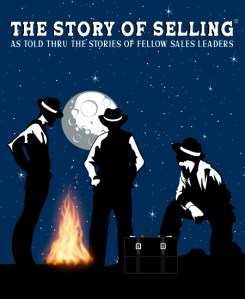
Recently, my son started in sales — and I shared my “wisdom” — some advice and often a story (always a story).
So, this blog will be based on lessons learned interspersed with my stories as a road warrior and discussion of other sales topics.
I plan to record some podcasts where I discuss these tips with colleagues and sales professionals — as we gather around the campfire, our “bag” at the ready — we doff our chapeaus and we tell stories to celebrate, to commiserate, to pass the time.
I will recount my adventures in technology — its been pretty interesting … and it all had bearing on my career. Apart from technology and sales, I’ll occasionally supplement with articles on on other topics such as music and even lawn care (I was known in my neighborhood as The Sod-father)
I’ll also talk about the “invisible hand” that guided me …
Let’s start with a first story: At Symantec in the mid 90’s, I was assigned a tech rep — lets call him Ray — and we had a massive territory as the enterprise sales team for the Midwest and Pacific regions. We travelled 3-5 days a week. Houston for our oil and gas prospects, then on to Arizona for McDonnell-Douglas Apache Helicopter, LA for McDonnell-Douglas passenger planes and Grumman and then Seattle for Boeing. It was a Wednesday night after three days of travel and we were deplaning, schlepping computers and luggage, and as we shuffled our way out onto a freezing jet way Ray says:
“Paul, There is only one thing worse than being Willy Loman…”
“What’s that Ray?”
“Being Willy Loman’s assistant..”
How true. Here we go!
-
TSOS_TIP # 31 Test_Polar Bear FINAL
Let’s take a test: Could you sell refrigerators to eskimos?
Your first assignment is up in the Lapland’s to sell the residents refrigerators.
I read the brochure, described the features. But they smile and say “..but our blubber is frozen – so….”. You curse your boss and take a walk – and what you see is frozen blubber indeed, Hanging from clothes lines, or from a nail on a shed. Rock frozen though.
During your walk penguins and bears scurry by – all with blubber in hand. You ask a resident how often animals rip off the food – and they say it happens often – and one resident snickers and says “don’t forget Harry” – the hungry eskimo who “shops” at night.
You have some ideas and you start asking a few questions:
“How much blubber is pilfered?”
How much / easy is it to replace?
Have you had a situation where you have run out or cant remember where you put it? Any hungry nights?
How many places is it stored and is it ever forgotten ?
The locals are impressed with your knowledge of blubber storage – and even they havent put all the costs together – but it is an eye opening look at the total expense.
Now, you invite them to a “presentation” where you review the findings. They are sitting on the edge,
You lead with a needs payoff question you learned how to do in SPin Selling (not the bike exercise):
“What if you could protect your blubber from animal thieves – yes, and hungry harry too” (A chuckle rises from the group and all are watching the head of the town).
“What if you could safely store it in one place for easy access and inventory control?” (a murmur now rises.)
AN, there is one new “bonus” benefit from all this: no freezer burn because the blubber is temperature and moisture controlled – as well as being able to assess your total amount of blubber in one place…not to mention other fish that was stored separately.
“Ladies and gentlemen, this simple key unlocks the benefits. what color would you like? Would Friday be a good date for delivery?”
“Oh, the refrigerator is free – and we have economical upgrades for the blubber aficionado. This key is only $1,999”.
Take Aways
Same product, different “solution”
You asked questions from the eskimo perspective
You developed rapport and trust
You used “trial closes” to geat effect
You were on a roll..and never had to eat the blubber.
-
TSOS Tip #9 Closing FINAL
Probably the most well known and infamous demonstration of “closing” was from GlenGary Glenn Ross. “Coffee is for closers” – and “ABC: Always Be Closing”. This is the high pressure approach and highly entertaining … but corp buyers are not likely to respond.
One of my colleagues familiar with my sales approach described it as “like churning butter. Slowing continuously churning until good things are the result.
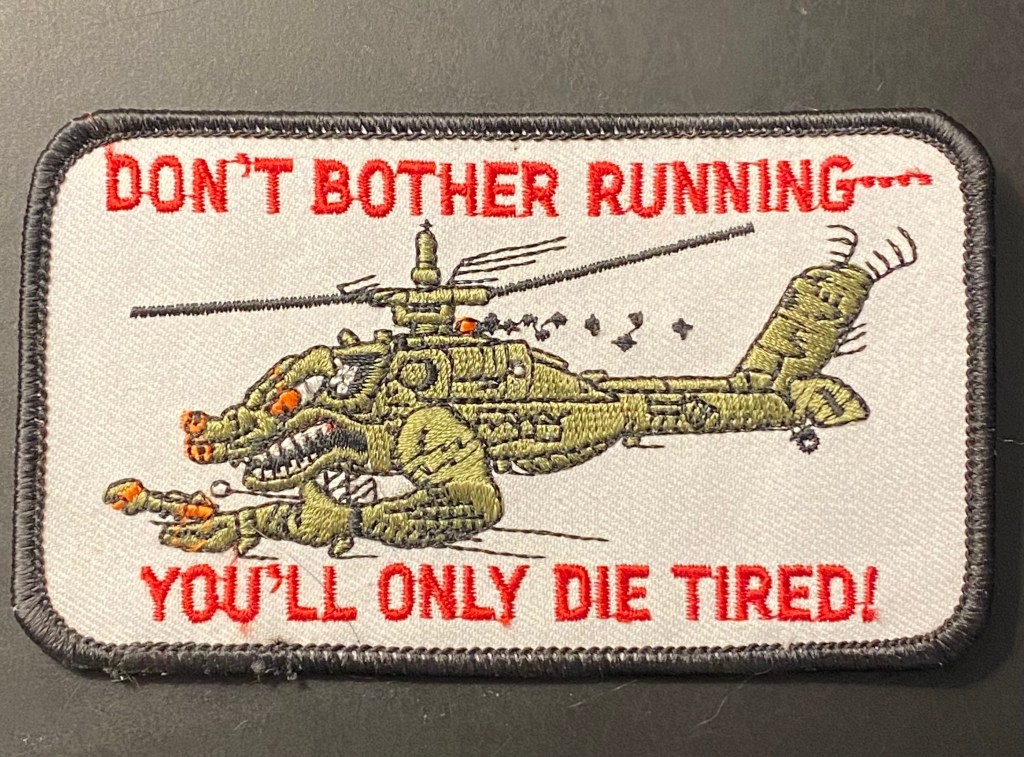
The patch to the left was given to me by the project leader at the McDonnell-Douglas helicopter facility. After we finished the deal, he gave it to me because of my persistence and help with the process.
I defined my closing style as like a “soft close” kitchen drawer: get it to a certain point and it just automatically closes.
If you have the info on their process from knowing the tasks they needed accomplished, and it met the desired date then the close is close (near). My approach was to put forth a soft close: “From what I see here in the proposed solution and based on your requirements I think this works. What do you think?” it draws the prospect out – without “asking for the order” – usually this is a very blunt and it puts the prospect on the defense.
In addition to the information that leads to an inevitable close, I used “trial closes” during the process – and since a trail close is a soft close but meaningful because it gives you a read on the project – once again, without asking for the order. My favorite was to ask if it was time to submit legal documents for review so that they were ready and not something to wait until the last minute. Or, is it time to submit a draft proposal for review.
There is also the “presumptive close”: typically a high pressure tactic that can be offputting: “You want that in black or white?” or “Would Monday or Tuesday be the best day to deliver?”
If you ask all the questions upfront then closing is “automatic”.
One final thought: Never enter a deal you aren’t prepared to close – as in siging up “bad” deals that might fail or return.
–30–6
-
TSOS Tip #4 Consultative Dialogue Questions FINAL
By Paul Petersen
Question Objective Stage Prob What prompted your interest in our products/services? Where did you learn of us?Who has asked you to look? Understand the prospect’s initial motivation Marketing Qualified Lead (MQL) 20% What are you trying to accomplish?Why is this important?When is due date?What do you see as the biggest challenge? Understand the business driver(s) 40% What is it worth?Can you quantify it?Who will benefit the Most?What is the cost of delay?How will you measure success?Why now? Tease out the valueEstablish monetary value to the objectives Sales Qualified Lead (SQL) Who is on the project team? Identify influencers Engagement If a phased approach is used, what would full deployment look like?Is there any benefit to implementing sooner?What would have to “go-right”?What can we do together to insure the long-term success? Establishing the Single Sales Opportunity Based on the value of this project, what needs to be done to complete an evaluation of alternatives and what is the date that we should be working towards for the full deployment?Is there any date that makes sense for organizational reasons, e.g., busy periodWhat steps if any have been started/completed?What remains to be done?What is the cost of delay? Understand all the steps required for the evaluation and set a data.Work backwards to establish a go/no-go date on starting. Is there enough time?Lock down date Is there anything else?Can we prioritize? Probe to get a list of issues/concerns How Will this project be funded?Have you budgeted this? If YES, how did they determine the budget and what assumptions were used –If NO, what is your company’s requirement for approval?Has your company made similar purchases? Understand the ROIGoal is to get to an apples-to-apples comparison If not, suggest requirements. Are you considering other options?How do you rate their and our strengths and weaknesses? Understand the alternatives including competitors and internal What is the process you will use to evaluate and select amongst alternative options?What criteria will be the most important in your decision process?Who else will be involved in evaluating?What will need to be done to get this accomplished? Understand the buyer’s process. What do you require/desire in selecting a company like ours as a partner? Share your client success stories Sell the Company “In the time we have together today, what would you like to accomplish?” (Peter Block)What will be the next step?What might you need to move to the next step? Manage your time to make sure nothing gets missed “When we develop a mutual understanding of your needs and our capabilities we will present a DRAFT proposal for your review:when should we aim to do this?” Soliciting prospect help in editing proposed components“Prepping the witness” to present to Upper “invisible” approversDo you have agreement on the need and solution? Trial close 60% 65% “Does this proposal represent a solution that meets your needs?” (Mahan Khalsa)If not, what would we have to add or change? Get confirmationHave prospect state it aloud – it’s critical in making this theirsNegotiate changes Closing 80% “If we can come to agreement on the terms of our proposal today, can you think of any reason why we shouldn’t move forward with our proposed solution?” (Ron Holm Track Selling Institute) It’s closing time. Act of commitment 90% Once we have completed this project to your satisfaction, would you be willing to share your experience with us as a reference or case study? You remind the prospect that you have something at stake. Cement the sale 100% Additional Notes on the Dialogue
- The questions are listed in order of preferred use – but can occur randomly in the wild. `
- You should strive to get answers for all questions and as soon as possible.
- Try to capture the notes in CRM for you and others to see what has been collected.
- avoid others in your company from asking the same questions multiple times. I call it “death of a thousand qualifying. “
- It is not a script: add, modify word choice etc. as seems appropriate. Delivery should be natural and bi directional.
- The objective is to “explore” the info on the opportunity and through one or more sessions build rapport, deepen the relationship.:
- the first question gets them talking – maybe the most important part.
- Explore this inquiry and what motivated them to consider change – start your dialogue…and like Topper, the prospect goes first. 😊
-
TSOS TIP # 2 salesfunnel FINAL
A sales funnel is a measurement of deals as they progress through your process – with low qualified leads at the top. Sales will accept a lead from marketing – defined as “Something to be followed up on”. You then perform Lead Qualification and you either have a real prospect or you don’t. Note: This is a crucial point as it is the result of your marketing and the sales rep will probe the leads interest.
Is your marketing generating enough, the right kind etc – this should be an ongoing conversation between marketing and sales as to what is working and what is not. If not working, then it s not a bad message – just an idea that didn’t work : as in This dog won’t hunt — see sayings for more on this)
The result of LeadQual is to identify one of 3 types of prospects:
- Current Prospect: those leads where your product and services could be used by the prospect and is currently engaged in finding a solution;
- Future Prospect: those leads that look like aitve prospects but for one reason they are not ready to evaluate alternatives;
- No Opportunity: Leads where the prospect cannot user your product: no ft, not a buyer, using a competitor, under contract etc.
NOTE to Marketing: Most of your marketing is geared to identify new contacts with interest in the products you sell. It is mostly designed to create brand awareness.
Future Prospects, however, already have exposure to your brand –so now I would suggest a marketing campaign that builds on that but focus on recent wins, new easy ways to use or install your product, infobased mailings about their industry etc. Success Stories. Think refridgerator magnet” that keeps your brand in their mind so when they are easy to move they remember you.
In the sport of fishing, you “throw them back for another day – let them get stronger.” But makreitng leads are too expensive and too hard to “catch again” – don’t throw them back in the water – keep them on a list you can go to.
The same is true fpr No Opps – but the message is different: solicit referrals, or prepare consultants who are influencers but not purchasers. Find a way to make lemonade from these lemons – they cost little and who knows.
Prospects are now engaged with a sales rep who will provide info, propose next steps and continue on towin orders or have a prospect drop out.
A key element at this point is the expected date of first order. Apart from identifying the product (s) you will propose, the expected close date is critical to know how good is your pipeline: for this quarter, or nect, etc. Miller Heiman calls this “the single sales objective” that you focus on.
Your sales manager will also want to know your Commit – that is, the deals that will come in but haven’t yey. Everything else is “what’s possible” and or what’s a long shot. This will be the most serious moment of truth for any sales rep.
- DO NOT MISS YOUR COMMIT ever.
Marketing Qualified Lead 
My Approach to Lead Qualification & Development
I developed the Consultative Dialogue Questions to create a low pressure approach to colleting key information. Its important to establish rapport so you can ask the questions that will help you understand.
- Listening is key – you cant learn if you are talking.
- Be authentic: offer positive statements about your product but avoid hypeboly.
- When yellow lights go off saying something is not making sense – ask additional questions.
- You may even need to try the “take away” where YOU gently say it may noy be a fit because — sometimes they come back and eliminate the cnvern or they move on—in whih case you don’t waste time> Iwas a hard qualifier around the issues that would prevent a sale – I wasn’t rude or cocky cuz you never know.
- Always manage your time together – allow for a non hurried exit where yu can recap.
- Most important: propose and seek commitment to a next step.
Using my questions, you will be collect info crucial to the sale:
- Approach: understand where the customer learned of your comapnt. It establishes context;
- Agree on need: what is the need and why is it important establishes what will be the driving force behind the deal;
- Tease out the value: to establish the ROI that will justify a purchase;
- Competitive Positioning: don’t trash talk but be aware of who and what their differentiation is;
- Sell the company: build up your company’s value;
- Fill the need: present a proposal that addresses their requirements and your capabilities. Good time to use the DRAFT stamp to get agreement;
- Act of Commitment: get the prospect to verbally state what they are thinking – and propose your Trial Close devices such as legal paperwork review;
- Cement the sale: be encouraging, keep in touch as the buyer goes through their fears.
-
TSOS Tip # 1 Lead Qualification FINAL

I always worked with inbound prospects – generated by our marketing efforts . Thus, like Topper, my system works best when the prospect sees something of interest and contacts us.
Ideally, your lead gen and or CRM will create the prospect record and send an alert to a rep based on territory, industry focus etc. My first question out of trhe gate is the aswer to: “I see you [called in | visited web site ] and then listen carfefully: those first moments will reveal the purpose of the call etc.
I try to ascertain the following info as well: is this a new customer reaching out? Is it an active prospect in the pipeline, is it a “future prospect” , or is it a prospect we haven’t heard from in a while, or an existing cvusomret? No matter. It just sets the stage for getting the conversation going. And this is a key point: get the prospect talking — make sure you allow them to tell you all that they want to say.
You are looking for clues: what prompted your call;? Research, something break or an existing customer requiring help.
What you want to be able to address is:
- What happened? Why now? Why is fixing it now important? (impact on the business)
- Why are we on your list ( this will give you insight as to why they have called you)?
- What do they need right now?
- What’s a next step?
<<END>>
-
TSO Tip # 28 Channel Sales FINAL
TSOS: Channel – Special Section
Our focus has been based on direct sales to businesses. Many companies also work with a channel – that is to say, independent third party businesses who promote your product as part of their go-to-market strategy.A Direct Sales team, including both outside and inside reps is a channel – and most common. They are employees of the company and sell and support end users.
And your website is a channel – while “direct” your ecommerce has a different team that runs it. The web can be uses to address transactional business such as lower price or volume customers or support.
Other channels can be established to expand coverage, e.g., international, and/or address market segments, e.g., such as businesses already certified for government projects. Channel options include:
VARs – Value added resellers. VARs work with the prospects and often provide ancillarfy services in addition to your product. They place the orders to your customers. the VAR adds that value of bringing it all together and one throat to choke sort of thing.
Distributors: they typically stock your product (and thousand morw) and provide fulfillment to small oor independent or low volume resellers that you can’t afford to deal wioth directly. This works great for products where there is a minimum of support required.
Integration partners: when services are required that is either a big project or where your product is just one part of the whole solution.
OEM Original Equipment Manufactured: an arrangement where your product is bought by a manufacturer who has incorporated your product to provide key features. The end user may or may not know that you’re part of the deal.
Each of the above channel options require different types of sales and support. You might have dozens of VARs but maybe only a few integrators or OEMs, if any. I’ll focus on the type of interaction management you should provide when working with VARs.
Typically a reseller channel requires sales assistance and business development. Your company will have set up what is called a “Channel Program” that describes the relationship with the reseller in terms of product training, marketing, trade shows, pricing, discounts. The program will usually set out where you can assist the partner in their lead generation and prospect engagements.
And indeed almost all channel programs have a separate team that focuses on channel support exclusively. It’s a different model.
The Channel MindSet
The first thing you have to understand is this:The resellers ARE your customers. Yes, there is an end user downstream. Yes, you want to communicate with that end user to make sure that they’re using your product and getting support. But it’s the partner who’s placing the order.
Now you’ll notice a little shift here. We started out this conversation about “resellers”. That’s a pretty generic term. From here on out, we will refer to them as “Partners” because that’s the best way to consider your channel: as partners. Working with a Partner requires collaborative efforts and trust and respect: thus the designation as “partners”.
You will be most effective if you can establish a working relationship with your channel partners and help make them successful. Read that again.
Help your partners be successful.
You need to develop a good positive working relationship with your resellers so that you can get the advantages that are desired. A channel rep must have the ability to work through others.
Your company has established a program with resources such as presentations, training sessions, marketing collateral including co branded literature. And maybe you ll have access tools for various marketing activities such as webinars, trade shows, and email marketing.
Use these channel resources to create momentum and leverage i.e., share info so they can close business without your having to be involved creates the leverage that the channel can provide.
- Let’s recap these points: You must have a different mindset to be a channel rep:
- You need to work through others to be successful (having direct sales experience helps)
- The partner IS your customer. Treat them that way.
- They are not employees: you have to build a relationship based on trust as exhibited by your actions.
- Next make sure you understand the partner channel program. Understand the contract and specific rules such as territory, pricing, Then look at all resources available to partners . these are your tools: product info, order processing, branding instructions, collateral.
Advanced channel program ideas:
What follows are aspects of a program that go beyond rep support. You may not have the responsibility to set up but you can suggest these.Partner Designations
Brand your channel program and let the partners use this to communicate their relationship with your firm.- Most channel programs will have some sort of brand and categorization.
- At GoldMine we set one up where there were three simple levels:
We started with the first level as Authorized for partners who have met your minimum requirements.
Next we set up two levels based primarily on sales level: Premier and Premier Elite. The name established higher level for partners tied to sales, number of employees, certifications. Reward any thing that differentiates them (and gives them a goal to grow). Create names that convey status. - Define specific rewards for their success such as increased margin, priority listing on the web site, joint marketing support.
- Create logos four resellers reflecting their earned status (I included the year for the highest tiers so they had to be updated every year).
- We had revenue goals that defined partner level: Premier Elites would have highest margins, top web listings, MDF etc; while Premiers would be next. Even the Authorized partners get their company listed (you want this to validate the partner. (encourage partners to get recognition and carry over web ponts by being listed n a site bigger than theirs thus increasing ctedibilty rankings).
- This creates a dynamic environment where partners are trying to achieve the best margins and promotion from the vendor (your company) .
Goals:
Usually a partner agreement has a target revenue- Our strategic objective with goals was to promote revenue consistency quarter to quarter – rather than the feast or famine that is common
- I preferred quarterly goals to create a little urgency (otherwise partners will wait till year end).
- set revenue goals that are achievable and have some reward such as incrcreased margin on product and /or promotion, e.g., a higher ranking on your website
- there’s a little bit of modeling there. Wha is the run rate for partnes? What’s the partner done in the past? What’s typical number of transactions, size a deal, all those things
- Set the goal based on achievable revenue targets, evaluate ‘pipeline, and track progress through the quarter.
- Reward for goals: rtypicalk the most important reward is Mondy. I was able to offer tiered margins for resellers: base line fo the entry level, and then two other leveels offering 5% more margin. MDF or spiffs are common. And thing like priority wbsite listings were also part of achieving the top status(s).
- When a partner “misses” a goal, I’d use this as a toime to talk and I’d help them try tpo get better. For large resellers who missed, they beg me – id offer some “amnesty” to have a second chance: by making up the difference, or getting a couple of deals in sooner. The idea was not to punish but to create some urgency and focus.
- The over all feelonig should be how cool would it be to hit target.
- We would determine sales and any margin changes two days after the quarter.
So that was the goal program and it was just a great way to talk with the partner about their business and about their business for you.
Building a Collaborative Mutually beneficial Relationship:
The channel needs somebody to support them, to promote them, to work with them, to help them get the deal- They are your customer. They are the ones who placed the order. They are the ones who call up and ask for pricing questions. They are the one who present all that to the ultimate end user of your product. But your customer is the partner. And that’s So what the reason why I stressed that is that yes, we want to know about the end user. But it’s the partner you have to take care of to get that deal done and through.
- They are Not an Employees: They are your partner and you need to work with them as a mutual relationship to get things done. The reward for that is that they will do things on their own after seeing you do it, or they’ll repeat what they did the last time they won.
- BE known for beng a good channel organization: You’re probably differentiating yourself from maybe some companies where The their channel organization doesn’t talk to them or they’re not treated very well. So keep that keep that in mind.
Partner Revenue starts with leads.
First and foremost, you’ll want to see what they can do to bring in net new customers – maybe from marketing or from within their customer database. And of course you can distribute leads to them for follow up.- A lead is a contact who has expressed an interest in your product/services. a lead is something for follow up…leads are distributed based on certain criteria such as size of opportunity, vertical industry segment, govt, geography. No matter what the lead, you need rules to govern who owns the lead…why? multiple reps working on a lead…the same lead…or different leads in the same company.
- You’ll want to be sure that the rules are clear. For partners, once you give them a lead, you would interact with them as you would a sales rep.
- Get confirmation they have the lead and have followed up; that they have confirmed the lead based on qualification criteria an d that the yhae next steps outline.
- Part of lead management is to have the partner keep you up to date and establishes a target close date. Ideally, you’ll play “il’ll show you mine if you show me y ours.” That is, they should include information on leads they have generated. This part requires trust –
- Your task is to see if they are adding to the pipeline and to be aware of the leads progress and potential opportunity.
- Set the expectation tfor the partner. And then I would call in to the prospect and say did you hear from them? Did you get the answers to your questions? I want you to know I’m behind this partner. If you need anything from us as the manufacturer, let me know, but work through them.
Economies of scale or 1 2 many:
This is where you leverage your channel.- As you develop csmpsgins forone partner find awat to invlove all your partners in actvities tghat will benefirt everybody. You could do a training video: record once, send individually to all you rpartbners. If you do a product or end user even make sure you ask all part ers to drive traffi c.
- By doing these things across a broad group of people, right, you’re getting your message out on a repeat, repeat basis and that hopefully will generate the additional interest. They’ll follow you and the partners who get information and help from you.
channel Pricing:
Let’s talk about pricing and some guidelines with partners.- I always listed things as a single user price, quantity 1.
- You would have to call me to get volume pricing. I need six of these or I need 1000 of these. “What’s the best I can offer the client?”
That way I was made aware of the deal. I could ask some questions about how serious. It is time frames to make sure we don’t give away money that we don’t have to, that we’re not bidding against ourselves. - With partners, we looked at their “earned” margi to get reseller cost. The end user price was a function of list less margn percent.
- My rules to address lower price:
- If customer asked, I’d use the single user price to start saying, “ for budget purposes use List – qty 1.
- Discounts were part of getting info and commitment from the the endf user Saying we will get better once we know first order size and toime frame:
“I’ll gie a discount for a bigger order and/or sooner.. So getting time with them and the owner is is. You know, you got to be careful and good use, but you’re focusing on, on their growth, um. So, um. So it was always, I, I never liked deal registration systems to get a discount.
POR: I
It was always important to me to have a Partner of Record indicated so that you can cross tab your database by partner to verify leads, forecast and let other s in your company indicate this customer/prospect is associated with a partner. That helps us to know who they are working with? There it is in the CRM system, it says they’re Partner of Record, but it also helped do some things that we could do for marketing.Persistent Partner Ownership:
So we I was very proud of this one aspect for our channel partners and that was I had our website, partner website designed and our website so that a partner would get a vanity URL that they could pass to their customer.
So that when the customer came through. The corporate website that carried through that partner and we could refer the lead back to the same person they were working with without the customer ever entering in the information. That was something we did for them to help keep continuity and allowed me to leverage my existing corporate. Info with the partner, because otherwise the partners would sit there. “I’m not driving them through your website. You’re going to steal them. It’s going to go through like lead processing.”- I had my company list partners on the cotporate website, tso custoers could fined a partner. he partner website where we provided training and inside scoop information.
- we had a vanity URL for each partner that when a partner clicked on it or a customer clicked on it, it would take them to the content from my website but refer them back to the partner of record. Very very important partner of record that we implemented along with goals.
If you can get it this is a powerful way to reward your partners.
Deal Registration:
Some programs required deal registration. The intent is to keep track of who the partner is working with and typically offers greater incentives the sooner you register the deal.- However, partners like to sandbag, that is to wait unitl the last minute.
- Very often companies would look at the registered deals and start calling in directly on their ow.
- But often the direct team would callin without collaborating with the partner – jeopardizing the relationship, confusing the prospect, and even jeopardizing the deal they were trying to protect in the first place.
- “Wow, look at what these partners did. let me give the partner a call and find out what’s going on at the at the customer.” That’s acceptable.
- What would happen though, is the partners would become wary of the direct sales reps pushing too hard. So they would register the deal only in later stage. thus missing some of the our ability to help you sell through the reseller.
- Partner cobrand:
put the partner’s name on a letter that we send out using our e-mail system or give them pre printed brochures with their name on it and your brand: - Leverage your companys brand/value prop:
- In order to get leads, I required that they add a landing page to their site. This link would present my brand and even have the same colors for look and feel – as opposed to using the partners home page as it might have other info, including info on competitors.
Collaborative:
Well, you have to have a true working relationship. Keep in touch to respond, reward, and move the deals to the next steps.- As we talked about, I worked on not necessarily every week calls very religiously, but I tried to touch base with my partners as needed during the month and at least talked to every partner. Once a month if I I do at least once 1/4 for sure made a minimum.
- But the idea was to keep just to keep in touch and not only and here’s one other thing. When you get on the phone with them, it’s not the demand something and it’s not the brow beat them. It’s to find out how things are going here.
- You got three accounts that you’re working on. How are they looking? Anything else we can do here or anything I can help you bring to the table?
- Have the partner show you their demo and presentation
Collaboration Story 1 Building Partner Trust – AT&T: Early in my career a channel partner asked me to attend a trade-show. My company set me up with a booth and I flew to Ohio. My company sent the usual trade show set up. I had a separate booth area with our banners and table tops and brochures. As I was setting up my booth, I notice that my partner was across the aisle. So it looked like we were working as competitors. But I knew many of the show attendees were there from my partners invitation. And I also knew that I would give them the leads after this show for follow-up. They’re not going to be happy if I do anything with those leads other than give them back to them. So I did this. I closed my booth, took my banner down, went across to my partner and combined our material and set me up to help – “Meet the manufacturer”| turn it into a special event.. I got to hear from their customers and put in a good word. I got to see how the partner handled prospects. I got to put in a couple of things I knew or new things that were coming that helped enhance the relationship and I it was a great positive experience. By my combining forces I helped the partner with leads and we both were able to see each other in action.
Side note: I used the opportunity of the show to thank my partner and the team for a good show, and offered myself as a resource to help them with prospects. I thanked individuals who had recently won deals. I even helped them pack up an dbought a beer.
My partner said , “now this is how you run a partnership. We’re going to do a lot of business together.” And we did. They did hundreds of thousands of dollars of business for me every year based on the relationship we started at this trade show. I built trust, rapport, and leveraged my channel partner.
Gratitude:
The Partner should get the praise for bringing the deal to the table, for working it with you, and for getting it done- Partners want recognition. Give it to them. If they said something great in the meeting, point it, say that was nice, that was awesome. focus on some positives.
- If you got some negatives or comments from the partner. “Hey, would you mind if I made a couple of notes for you?”
- give them some praise. Thank them.
- Certainly when an order comes in, thank them. “You did a great job. I loved working with you. We had a great team effort. I appreciate being able to be there”
- Offer thanks that is specific, “Thanks for letting me be there. That call that you organized with Steve took us so far”
- With gratitude Reinforce the behaviors and things that were effective not only for you, but for the the customer and the partner. Remind them of that.
- Most partner organizations have a recognition for the quarter. If it’s your partner’s make sure you’re there to present that award with your partner.one that you’re up on the stage with them or on the call or wherever you have to be that you get a quote in for you, remind them that you’re there. That you are acknowledging their success.
- Give them a quote they can use in a news letter.
- Gratitude Story:. I had a quarterly meeting coming up and I was to handout partners of the quarter awards and we noticed one that was misspelled. And so I called the company and requested a correction but it wouldn’t be In time for the session. So I had them give me a print out of the design of the award. I would at the meeting. And go through the normal steps, I gave him that piece of paper as a place holder. I had slipped it into a plastic kind of display stand and had it printed on some heavy
stock. It was like a certificate. But in any event, I gave him the reward and said, “I’ve got the replacement on order”. Couple weeks later I was at the partner’s office and I knew that the award had been shipped and received by the partner . I’m in his lobby and I don’t see it in the display case that they had. I asked,”
“hey, didn’t you get th replacement?”He replies,”I got that in my office.”
“Well, you know, you could, you could put it in the case to replace the paper one.” And he goes, “ohh, no, that’s what the one YOU gave me.”
That’s the power of recognition. Its personal.
I’m reminded of a song by Alan Parsons. I robot. Don’t let it show. No matter what you do, we know you’re a good sales Rep. We know you know your product….but give the reseller the public recognition. Focus on the reseller. You’ll get more leverage out of that than you will of saying, “hey, what about me?” you have to sublimate your ego a little bit and let them be the star of the show, which I think they should beRespect:
Show respect to the partner because it’s hard running a business based on hourly sales. Resellers are independent and need regular product and service sales to survive, Channel reps work in offices wit salaries abds benefits…be humble.but you have to work, focus on profitability, show some respect for that and especially if they’re smaller reseller. You can make a smaller reseller, they’re toiling anonymously, Maybe there’s real smart and they’ve got a good customer base, but they’re kind of techie and they’re kind of weird. Yeah, they may not be your biggest revenue producer, but maybe they’re good to have out in the field. I ask guys like that to do a little tech session for me. the other thing is if they have sales teams tech teams The other thing is if they have sales teams and tech teams, try to encourage them, Hey, that was a great deal you worked on or I had talked to your customer. It was very unhappy. You made them very happy. They happened to call me back something, something like that, but acknowledge what they’re doing for you every day. And so make sure you reward the team as well as the owner and always. Meet the owner with a great deal of respect because it’s, it’s a very hard, very hard, you know, business and you can’t spread enough praise around in my, in my mind. You know, we, we,- I always buy lunch if I go to the office and try to get the team out for some reason on a quarterly basis, get them out for a moment andnhave a little laugh, share a story from the field. And offer thanks.
- If you meet for drinks, have a cocktail and let everybody go home and be with their families, but they get a chance to say hello.
Competitors:
Let’s talk about competitors. You’re going to have resellers who represent other competitive products.- I made it clear to my partners that my customers and leads were mine and they while I would entrust them to the reseller,
- if you came across something where you didn’t want to go with our product, you had to give it back to me and we could decide. S
- So in some cases. I said, you know what, you’re right, I can’t service that. Customers need and will never will. So you can run with it.
- Giving the partner a lead like that, it’s like, whoa, instead of hanging on to something I knew I couldn’t win or that we couldn’t win, you, you give it to somebody who could. I helped his business and in that, that one act, whether he won or lost.. I used to do that periodically because it came up it made the the relationship less contentious.
- But the minute they did something to flip a lead, I got on the phone and I let him know and say, dog, every dog has one bite. This is your bite. You cannot do this again. So don’t risk it. And I’ve gone through wholesale watch wholesale dismissals of partners who had. Up in poaching is as it would be called. So don’t do that.
- And you may have it tough discussion and sometimes and take on a perspona:
- You have to be Julie the director on The Love Boat or Spock OR
- Tony Soprano and have to do a little arm twisting.
- But you all have to do it deftly and with respect. But you have rights, you can be candid.
- Read some books like Mahan Khalsa about difficult conversations that you have to have.
know your partners
The first thing you need to know the capabilities of your partners:- How many employees? Their Skills.
- The partners largest customers and their business model and any profile info on customers marketing.
- Any special business terms such as no Purchase orders.
- Do they have minority contracts?
- Are they government approved?
- Are they in a geography that you can’t get to ?
- Do they have a certain technological expertise that the custeomr will value?
- I have some partners that were very polished and handled big projects; and then In had other partners that were a little bit more modest, a little bit more economical.
- For purposes of lead distribution and services, I would try to match the personality. I don’t know that I was always right, but I tried to give the customer two choices that I thought would be a good cultural fit and I would always make that clear along with my willingness to discuss their experience.
- “’I’m going to recommend xx to you, “I think it’s the best one. If you like them, go forward. If not, come back to me and we’ll talk about other choices.
- Be aware of partner credit limits so they wont have a deal get held up.
- After distributing a lead or an existing customer might call you. Whenever you happen to work with a with a customer directly, make sure you tell the partner about it and then discuss who should respond.
- If you have a three way call or meeting (prospect, partner, you) make sure you have a role to defined – and review what will be discussed: what addl info does the clinet need, do you need?
- “What would you like me to do?”
Do you want me to talk about the company?
- I’d let the partner take the lead in the meeting.
- “What would you like me to do?”
- Never talk badly about your partner: they WILL find out about it.
Direct vs. Channel:
A channel can be helpful – but there are pitfalls that need to be discussed to avoid “conflict” – that is, the problem when your direct team and the channel are working on the same deal.Direct sales reps by their nature want ownership of the accounts and sales process. They are not inclined or geared to “help” partners sell. So, your partner program should have well defined territories be they geographic, size of business or vertical market.
Now, lets address the “elephant in the room”. Channel conflict.- When can you take a channel lead direct? NEVER.
“but Paul, they said they want to deal direct…”. NEVER.- You take one deal direct and the partner will never trust you – and not just for that lead. You’ll get less info on forecasting and the phone wont ring to keep you involved.
- In this situation, stress the value of the partner – ask what the issue is etc and then engage with the the partner.
- There may be situations where going direct makes sense –
- for example, a company is about to make a large purchase and the partner doesn’t have the credit rating to carry the order.
- Or the end user wnats to talk wiht product management directly.
- Both are reasonable but your first step before any action is to talk with the partner so you can get their perspective and then craft a solution that keeps the partner in the game — everything you do is to help the partner — not to exclude them.
- Direct reps are built to own accounts, set strategy etc –Get your help from other resources within the company. Involving a Direct Rep in a channel deal is not recommended.
- Conversely, A direct rep might want to have a partner get involved because of their expertise. This situation is a great way to buld a relationship woth the direct team. Discuss the need and specific steps the rep and aprtne want to address. THats great to foster – and here the account is ownded by the rep and the partner is partn of the team. Just get everything in writing.. 😊
BONUS
If you run a channel with big box outlets like cdw, Insight you can get what is known as “sell through” reports where they list units moved by each of their customers. I’d ask for that and the skim for big name companies that were buying a few copies of my software. I’d then call those companies to see why they pciked us and what the potential was. I then created a “free” trining session on some of themost used fatures and how to custolmize (withtheir brand, titlem etc. I had dozens and the end user managers attended as well as purchasing. I generated $250k with two deals (AMOCO Chrystler)
Conncllusion:
As you can see, being a successful channel rep requires diplomacy and a deft handling of egos. Work with them with that POV and I know you’ll find the channel to be dynamic. It allows you to do a number of things such as marketing, sales support and organizing classes and so forth to make to help them be successful. But that is part of the fun.And that’s the final thing I want to end with.
The channel is not there to make you successful –
You are there to make them successful.
Summary Quick List
- Understand what is required of partners as detailed in the partner agreement.
- Understand all tools and resources that are available to partners: Use them and implement activities for all partners to create economies of scale.
- Try to establish partner goals for each quarter to build a more consistent revenue stream.
- Hae partners demo and do a presentation to you.
- Have partner create a landing page within their site – this page will have info on your product and avoid confusion with the partners home page.
- Understand your partners capabilities and use this knowledge to select a partner for an end user.
- Have regular calls on lead status.
- Make follow up calls to leads to make usre partner has followed up and also to get the end users perspective on how iti is going.
- Show thanks to partner and his employees: congrats for an order.
- Let’s recap these points: You must have a different mindset to be a channel rep:
-
JOBS_software in old days
-
TSOS_# My_Guiding_principals FINAL
Five things t learred (as of October 2017)
First, there are many attributes of work that guided me such as work life balance, integrity, ambition, getting it right. I believe in karma – and the Golden Rule
These are tenets of life, not lessons learned however.
So what have I learned?
1. Adaptability: have to accept and participate in change; l’ve had 7 CEOs – all good guys but different. I chose to participate rather than fight it
2. An “idea” is NOT a “plan”: many a good idea goes unfulfilled for want of execution. Have an idea? Enlist others to help — have a bias for action.
3. Communicating is hard – I learned more from listening than speaking. And by listening, I was more relevant by absorbing and applying what I heard
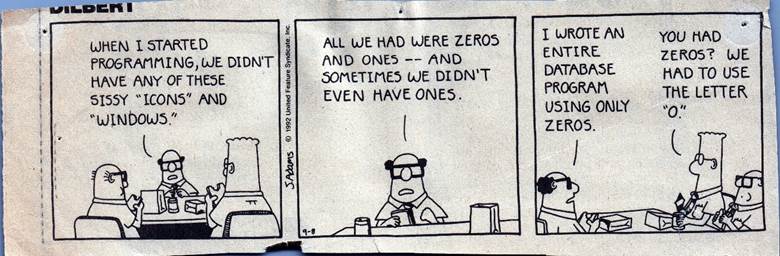
4. No one Cares what you did or know in your past… only what you do now. No one asks “tell us about software in the old days Mr Petersen”
5. Make your boss look good (and team) – offer your opinion and then be supportive of what the boss decides;
6. do what you can to help others succeed; offer praise, cooperation – and phrase critiques gently.
7. If you don’t have something nice to say then don’t say it
8. Boy Scout Rule: Leave any plae cleaner than you found it
9. Respond quickly and meet you promises
10. Know your products
Bonus: have coping strategies: Pick your battles, be active, do stuff /press on
-
TSOS_#X What_Is_Sales FINAL
Sales is:
the art of interacting
with a prospective customer
in a mutual relationship
to share information
towards a desired result
Art: the art of sales – for corporate level sales reps is more than a “smile and a shoeshine”…products are more complex, the prospect has access to lots of detailed info before even speaking with a sales rep. Today, the rep is a consultant. And while sales exec pursue repeatable steps and process to achieve a wining sales process, the sales erp can bring humor, offer thoughtful suggestions. And buying is an emotional experience given it brings fear of failure or anxiety facing change;
Interacting: phone, face 2 face, web calls – even text messaging. Today’s rep has to be a master of communication;
Mutual relationship: Both parties win.
Share information: it is more important than ever to get as much info as possible from the customer and then offer up your “sales pitch” with a focus on what is most relevant to the prospect;
Desired result: The prospect should describe the desired result be it efficiency or cost reduction or increased service levels. The wording they use should be the opportunity’s mantra. The sales rep contributes to his company.
-
TSOS Birth of a Salesman – My Origin Story FINAL
Welcome to the Story of Selling blog. I am the author, Paul Petersen. I have over 50 years of technology experience as a programmer, as a consultant and as a sales representative. I have worked with a quota for over 35 years.
My career as a sales representative started in an unexpected way. Unexpected because I was in law school – about to become a licensed attorney. I had to pay for college and law school so I started work as a self taught computer programmer. Good pay, flexible hours. And I joined a trademark firm before graduation. But I kept gravitating to technology issues and left the firm and joined Arthur Young as a management consultant with Arthur Young helping big companies look at new operating systems and reengineering process. (My work history is in the appendix).
So, i shifted gears and entered the dark world of sales: it was the best way to earn more money leveraging my technical expertise. I just needed to learn sales – how hard could that be?
I started working for commission inn 1986 and I sold box product in retail, services, and large enterprise deals. I ran a worldwide marketing and sales organization as well as a channel of dealers. Over 35 years on quota. And an estimated $60mm in ebitda at my last position.
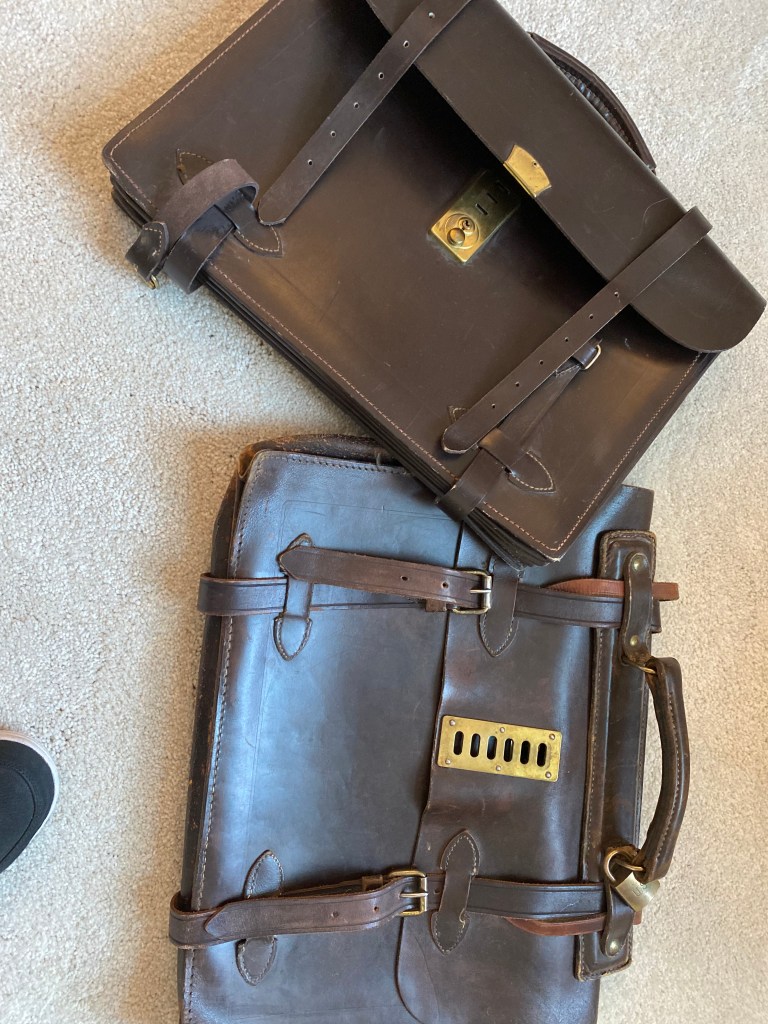
During that time, I made quota most of the time and earned President’s club over 12 times. The role as a sales professional was a good fit for me. I was lucky too in that the companies I worked for provided sales training and I would “read up” to develop my skills. I liked technology, was a good speaker, and enjoyed helping customers explore their options.
I was proud and enjoyed “carry a bag”.
As a sales rep and as manager, I became aware of things I could do to help my sales process and just to be more efficient. Thus, upon my retirement, I have undertakin this effort to capture my “tips” and share them with you.
Today, the world of sales is changing. AI has made it much easier for prospects to get a lot of very specific info on solutions available to them. And that personal “smile and a shoe shine” schmoozing for the most part has been set aside. Customers want value and are prepared to go it alone. In the “old dys”, I’d order 10ks by mail to learn about a company; fly out to meet with the company “software eval team” as part of a “bake off” between vendors. Today, you are lucky if you get to meet face to face. In fact, my last three 6 figure deals were handled over text, email and docusign.
Many people are in sales and surprisingly, some industry studies show that over 80% of reps are not at Quota. There is plenty of room for improvement apparently.
So, do we need another sales book? There are many – but I found that often the authors would focus on one aspect and not others; or they’d discuss approach but not get specific about “what to do or say”. (I have a chapter on Mastering your Craft – a list of my training and reading”.
As a sales manager I have watched many a good person make misteps that could ose the sale. As i reviewed what made me a successful rep (for now this means consistent quota performance) I realized that i used bits & pieces from what I read or observed and determined that many things that are important for sales are not purely sales. Often the inclusion of personal productivity has a bigger impact than say a sales tactic like “trial close”.
My intent is not to claim any inventions, nor to say that I am the world’s greatest sales rep. Sometimes, I wondered did i “create that sale” or just “get it in the boat?” Does it matter?
Most times you have to work hard just to be considered let alone win a sale. Other times it means keeping your mouth shut and not getting in the way. Knowing when to use one approach or the other is the key.
“Carrying a bag” is a honorific phrase. It’s sitting around the fire after a long day, swapping stories that we learn. With that, I hope you find a new tactic or more.
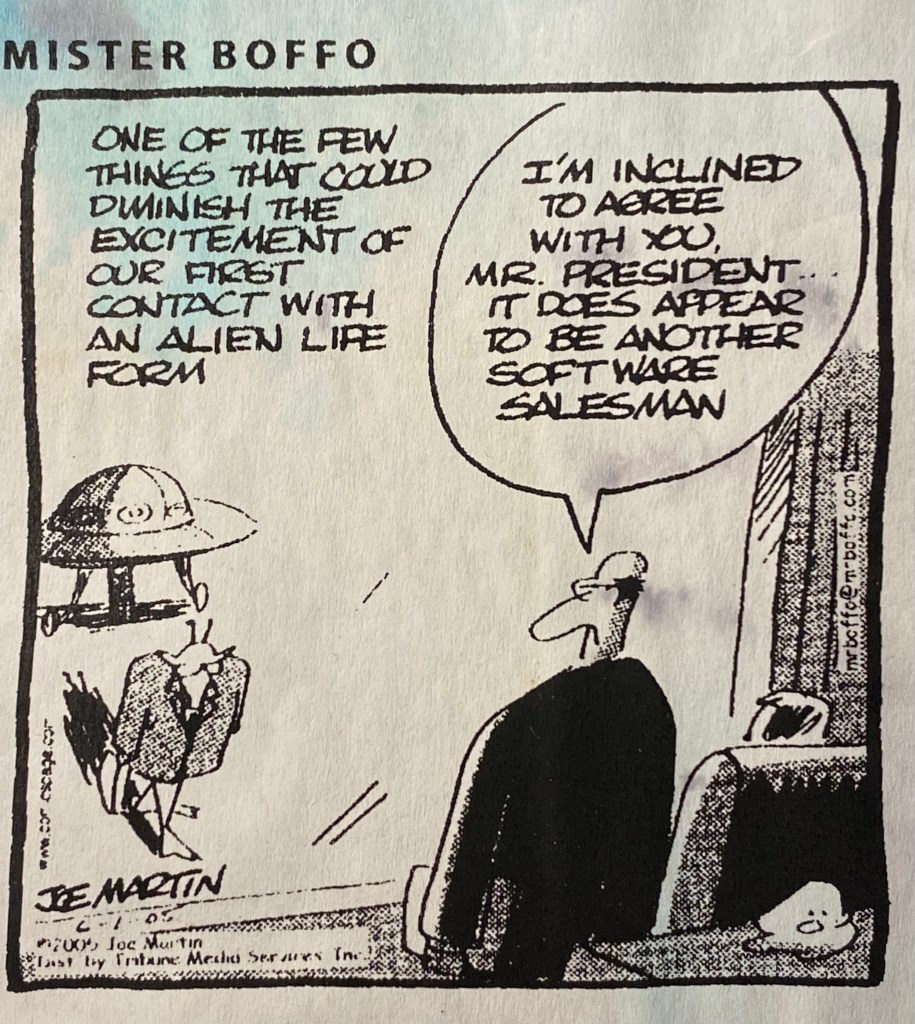
Mr. Boffo: how many users do YOU want to buy? Author’s Note:
I became a sales representative for the money – and I found it to be a good career. I enjoyed learning about the busineses that m yy clients ran from SMBs to Fortuene 2000.Here is the secret code to my success: I was curious, liked talking to my prospects and tried to add value to everything I did.
Home

The BLOG
Paul shares some tips and stories from his experience as a software executive. .
 A blog by Paul Petersen