
-
TSOS Short Intro to my Blog TheStoryofSelling FINAL
I have been a quota carrying sales guy now for over 35 years. I started out as a film major but joined a corporation and became a programmer…and technology became my field… but how to make more money? I became a sales rep.
Recently, my son started in sales — and I shared my “wisdom” — some advice and often a story (always a story).
So, this blog will be based on lessons learned interspersed with my stories as a road warrior and discussion of other sales topics.
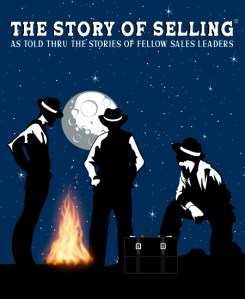
I plan to record some podcasts where I discuss these tips with colleagues and sales professionals — as we gather around the campfire, our “bag” at the ready — we doff our chapeaus and we tell stories to celebrate, to commiserate, to pass the time.
I will recount my adventures in technology — its been pretty interesting … and it all had bearing on my career. Apart from technology and sales, I’ll occasionally supplement with articles on on other topics such as music and even lawn care (I was known in my neighborhood as The Sod-father)
I’ll also talk about the “invisible hand” that guided me …
Let’s start with a first story: At Symantec in the mid 90’s, I was assigned a tech rep — lets call him Ray — and we had a massive territory as the enterprise sales team for the Midwest and Pacific regions. We travelled 3-5 days a week. Houston for our oil and gas prospects, then on to Arizona for McDonnell-Douglas Apache Helicopter, LA for McDonnell-Douglas passenger planes and Grumman and then Seattle for Boeing. It was a Wednesday night after three days of travel and we were deplaning, schlepping computers and luggage, and as we shuffled our way out onto a freezing jet way Ray says:
“Paul, There is only one thing worse than being Willy Loman…”
“What’s that Ray?”
“Being Willy Loman’s assistant..”
How true. Here we go!
-
TSOS Tip #3 Master Your Craft FINAL

The birth of a salesman: how I got up to speed
Willy Loman is arguably the best sales character I know. A man working hard, some success but his reliance on the “smile & a shoe shine” approach has resulted in a subsequent drop in revenue. Along with delusions of success that aren’t real – every sales rep has to be creative, take some risk, be adventurous. Maybe a bit crazy. But most of all they have to be resilient, thick skinned, able to push aside self-doubt, and accept rejection. Its an emotional nightmare hidden by bluster, unjustified self-confidence, and a comeback desire “to win next time”, to push ahead in search of money to support the family, success to fuel the ego, and to win that “one big whale”.
Invest in sales training
- Take anything that is offered from your company
- Read and understand the concepts and best practices of the following:
- Strategic Selling by Miller-Heiman. Learn how to identify supporters and detractors. understand the strengths/weaknesses (Blue Sheet)
- SPIN Selling by Neil Rackham. How to guide the conversation through structured questioning.
- Consultative Selling: by Mark Hanan — on using ROI to drive your sale
- Short Cycle Selling : by Jim Kasper – a complete methodology that covers all the steps but in a shorter period of time.
- Let’s great real or Lets not Play by Mahan Kalsa. How to build a relationship of equal information sharing.
- Get to unconscious competence — make it natural, your own.
- I don’t like scripts – but they can be effective: same process repeated – could yield higher results:… but often comes across as mechanical
- Rehearse
- Don’t expose your sales process or script to the prospect.
My list of movies and plays
- Death of A Salesman
- Door to Door
- Glen Garry Glen Ross
- Tommy Boy
- Tin Men
See, blog Birth of a Salesperson for a reading list
<<END>>
-
TSOS Tip 15 Notes on Creating a Discussion Outline FINAL
Notes on Creating a Discussion Outline Proposal Creation
At Arthur Young there was an overall set of guidelines that explained the general process of going from specifics to a broader perspective:
- First, the Consultants would gather the facts
- This was from interviews and documents. Key operational info would be determined.
- Second, the Managers would add the weasel words:(*)
- that is, words or statements intentionally ambiguous or misleading (i.e., salesy)
- usually where we added some hyperbole or increases / decreases such as “Increased by 10%”
- Thirdly, the Partner would take out the facts:
- This sort of distilled process allowed us to talk at a strategic level, e.g., “we can increase sales by 10%” without getting lost in the weeds.
- The Discussion Outline I describe was often attached as an appendix.
* Did I say “weasel”? I meant “Mink”

- First, the Consultants would gather the facts
-
TSOS Tip #8 Give the customer the Pen FINAL
Topic: have the prospect “help” you create a winning proposal.
Presenting a quote or proposal to a prospect is a delicate time. I call it the 0-60 moment or a moment of truth. You are actually “closing” on the opportunity. Just emailing it or dropping it off may be easier but not very helpful.
It may be the first time the prospect has seen “the number” – or the first time they seriously paid attention – after all, they now need to explain this to their boss. The good news is that instead of being nervous, this pivotal session can work to your advantage.
- How do you determine if you have written a proposal that meets their needs?
- How can you “coach the witness” so that they can be convincing with their boss and other hidden Economic Buyers?
The answer” Give the customer the pen. Create an opportunity to collaborate with your prospect and explore the elements of the proposal together. Here’s how:
Preparing for the Proposal meeting:
- Review the particulars of the opportunity as you progress — In your process up to this point, you’ve collected the necessary info on the opportunity and determined there is a fit.
- Before you present, make sure you are familiar with the data that confirms yur proposal is a good fit. I used to prepare Discussion Outline to summarize my findings ad conclusions and recommendation. A cover letter or email, or at the end of a call or meeting as part of the wrap-up. Make sure that your prospect as reviewed the data points with you. or with a few check in calls along the way. You do not want any surprises when you are presenting your proposal.
- You can now prepare the estimate/quote/proposal.
- Do not engage in premature elaboration: Set a date & time with the prospect. Your goal is to create an opportunity so you can walk through it together – real-time. and You can then make adjustments during the session.
- Do not deliver a copy or email – one major objective I held was to minimize the distribution of multiple versions where the prospect loses track and they see a range of numbers. You want to minimize this.
- You can always ask to be present when your contact presents – but its most important that they are comfortable and they have made it their ow.better to have the prospect involved to “make it their document”.
- The First Sale is to yourself: make sure you can deliver the number without hesitation: confident that you can help the prospect.
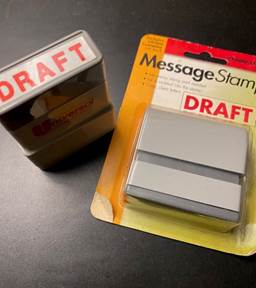
In the old days , I’d print out the proposal and I always stamped it “DRAFT” with large type and red ink. (Today you could add a watermark or a footer with the word DRAFT in it)
“Give the pen” makes ti possible to create the collaboration by editing together. etc. The stamp just reinforces the fact that it is open to adjustment — or acceptance. You just need the prospect’s help.
At the meeting:
- I’d present to the client as follows: “I want to get this right – can you help me edit this using your terms and words?” We’d then discuss it and I’d let the prospect poke holes, ask questions. My goal was to have a proposal that matched what my sponsor at the account needed
- This would be a great time to give the prospect an actual Pen – if it had your logo on it all the better – a leave behind – -but make it a nice one.
- Start with a review of scope and why this project is important to the prospect and how you propose to help.
- After reviewing the proposal ask for changes:
- “What would you add or delete? And Why?
- Have the prospect verbalize aloud – saying it out loud is a key element in helping the prospect “own it”.
- Mahan Khalsa had the closing I liked: “is this a proposal that meets your needs?” or from Max Sachs: “If this proposal meets your needs do you see any reason why we couldn’t move forward?”
- Don’t Spill your candy in the lobby – don’t offer up concessions or discounts right away — have a walk through all the way and then go back. You want agreement on the overall approach and then you can get in to nitty gritty detail. Make sure that the prospect knows the value
- On pricing, if you need to offer, by discussing the value as part of the proposal process you may be able to offer a lower discount or offer non-cash items instead e.g., a free training session.
- As you wrap up, ask if there are any questions that the prospect has – and what questions will management ask.
When you are done, here is what you can accomplish:
- Get approval from your prospect
- Hae a marked up document with agreed upon changes –including word choice etc.
- The prospect is now able to explain the proposal to others.
- Promise to prepare the FINAL Draft. This hopefully eliminates the confusion of multiple documents.
<<END>>.
-
TSOS # tip 22: Free Shrimp Tomorrow DRA FT

We were driving through the city and my young son noticed the “Free Shrimp Tomorrow” and paused — “Dad, what will the sign say tomorrow?”
I said, “The same.”
My son thought for a minute — “So, there’s no free shrimp.”
Yep, that’s life: no free shrimp.
But this has an important lesson for us: the promise of tomorrow is always there and can be a distraction. We think it will always be there … therein lies the trap. A focus on today prevents us from getting to tomorrow. Successful sales people are highly responsive. we are busy working on prospects that are active — But that often keeps us busy and we never get to the activities that are needed for developing a pipeline.
You have to make time to build pipeline: to work on the things that aren’t ready now but might be later. This is about the prospect’s timing as well as time management by the rep. In many reps thinking, the odds of winning a new prospect are much worse than the “sure things” you are working on now so they work everyday on today… that you’ll get to the other leads later: the Free Shrimp Tomorrow syndrome.

So, periodically, you need to look at the leads that are in your possession and start to assess their potential:
- First, i would try to sort out leads who could never buy: size, complexity, incompatibilities — identify early so they don’t clog your pipeline. Some reps hold on to everything — and you can see leads that reps have worked for years with no progress. Get real.
- Second, be honest about the time frame of a prospect. I used this rule to work my pipeline: A good sales person knows when a customer could buy, a great one can move it forward. (The first part is important for this discussion; the second part is more about forecasting.)
I would look at my deals and project their estimated close date based on the customer’s process, taking into account demos, tests, purchasing, legal review etc. Many reps get tripped up and focus on winning the presentation without understanding the entire process and timeline — when there is much work to do. Not knowing the timeline leads to “slipped deals”.

A rep of mine asked for a discount to incent customer to buy in September. I asked her if she had run this by her sponsor: “if i could get you a discount could you do the deal?” She hadn’t.
I put a call in and learned that even with a discount it wouldn’t happen as it required board approval — next one in November…
This is what i call: Spilling your candy in the lobby. She would have offered a discount that wouldn’t help us — but the customer would say: “we have to use the discounted pricing even thought it wasn’t in September because this is what we submitted to the board.” (Not to mention that she was unaware of the board approval requirement).
BONUS TIP: I always check on approval levels early in the cycle — helps with planning. Many reps operate linearly — one step after the other other. I attribute some of my success (especially on larger deals) by working on concurrent tasks. the goal was to shorten the sales cycle.. At some point, if i felt we have made progress, I’d suggest, “Based on how things are proceeding, is now a good time to submit our legal agreements so you can review?” This is a bit of a trial close. No matter what the answer, you “”win” — in the sense that your buyer will either give it a green light or raise reasons for not (in which case you can work on this now rather than being surprised at the end of the process).
I had a large deal — it was stalled — my sponsor said it was stuck in purchasing…so i headed down to the 5th floor to introduce myself (BTW: I didn’t ask my prospect for permission — I just headed down. in that sense, I was a bit aggressive.) what I learned was fascinating:

- my sponsor didn’t know the internal process for approvals — as they had not made an enterprise purchase before.
- through some questions about how he worked, I learned that the purchasing agent’s priority was working deals where he could save the company money… and his bonus was based on the “savings”. My deal was low on his list as it required extra work to present to the board.
- I asked what was the dollar cut off for board approval — and calculated we were only 5% higher. So, wait it out for board approval or eliminate the risk and take 5% less?
- I suggested to the purchasing rep that if I could get the deal under the limit could we do it this quarter (always ask for something for any concession you make): he said if it was under that amount, that the CIO could approve. I asked him if he had everything he needed from me, was everything ready to go except for the approval.
- Now, when it comes to selling “high”, you have to have the right approach and subject matter that is appropriate for their consideration. I called the CIO, brought him up to speed that his team and mine (notice i build up my team as important as his) had identified the benefits and I learned there was a board approval required. He confirmed and he too mentioned the additional work and exposure. I then presented my “solution” — in return for a deal this quarter (so important to set up the bargain this way where the “give” is upfront) i could discount just over 5%. He said if that was true, he’d sign the paperwork when purchasing brings it up.
The goal for considering these timing issues is so that you can more accurately project when deals should be closed. Id put these deals on a virtual WhiteBoard that my tech rep and inside rep could see and wed use that to discuss what each of us had to do. This allowed us to work on big and small deals for each quarter.
The objective of this is to balance your time..
But what about leads that aren’t ready? you put in a folder, or put a call back reminder on your calendar. More shrimp for tomorrow. .. that you don’t get to. its sort of like catching a fish that isnt legal — you throw it back and hope it comes back when it is ready.
What are the odds of catching the same fish twice?
However you get leads, they will fall into one of two categories: In talking with a lead, you’ll identify some that wont ever buy — so you mark with notes as No Opportunity…and you’ll identify some that could benefit from your products/services but cant move now — for example, a contract. So you’ve talked with them, understand the fit and timing — now what?
I call these Future Prospects – and this is a major way to build pipeline for the future.
Since you qualified them, presumably they now know more about you. You should keep in touch: not “are you ready now?” but some special messaging that keeps your brand and value prop in front of them so that you have multiple touches. don’t send the same brochure and don’t use the same messaging you use to develop suspects. Focus on information the Future Prospect my find helpful and that helps drive awareness and urgency to act: share success stories about customers like them who have succeeded, ROI, reasons to migrate etc. Focus on benefits for your customers.

If you have a CRM or contact manager, tag these records as Future Prospects and then communicate regularly with info on how you have helped other customers succeed.
Size doesn’t matter — everyone wants a Jumbo Shrimp but selling to only big customers is deceiving: they need attention, require your time – but maybe they are buying all they can. Your pipeline building should include customer accounts that could buy more: share of wallet. Maybe they use a long time supplier but you are a back up, or maybe they are building a new product line and will grow – but now are using just a little of your product – but could they buy more? What is your share of their wallet? You need to know because it is most likely easier to build up an existing client than to win a new one . but if you look at sales numbers, you might go Bah. Peppers & Rogers called this Most Growable.
Retain your customers of course, but they advocated firing customers who cost you money (Below Zero)…I was never a fan of firing — but set pricing accordingly and your lower end will self selct out. Many businesses and reps look at the immediate order — not the potential.
So, in conclusion, keep the future in your current plans. Understanding timing gives you flexibility. You’ll have plenty of shrimp any day you want.
-
TSOS #_5 Listening for Fun & Profit DRAFT
The old adage makes the point: you have two ears and one mouth: use in same proportion. You can’t learn if YOU are talking.
Listening is hard work. First, you have to get people talking. Second, you often will/can be the person who leads the discussion… but how? By asking questions.So “talking” is part of listening. What comes first? It depends.
if someone is willing to talk, let them go…While they are speaking, Take notes of cadence, changes in tone, etc. and let them go until you get a chance to ask clarifying questions… to ask what I call “gap questions” — to seek missing detail.
If the reverse is true, say you are following up on their visit to your website, then I had a stock open ended question. I’d start by reminding them that “I am following up on your visit / call” —- establishes that you are just being responsive to them:
- “What prompted their visit/call ?” — what’s going on in Their business
— why is this important?
The goal early on is to get them talking about key aspects of their inquiry. - don’t make it obvious you are qualifying: qualify first around motivation and business reason, urgency … you can get other specific details along the way.
- “how do you see this playing out?”
Get them to verbalize their current vision. Verbalization brings their thoughts out into the open … hardens them. It’s an important psychological step in helping them commit… to themselves first of all. It helps them solidify their thinking.
So, your first efforts are “talking” — now we’re ready to switch roles.
Your next “talking” is now to build rapport and convey your role.
- “Thanks for that detail — based on what I’ve just heard we can help.”...or if you can’t, let them know: “We don’t do that…” Better to move on.
- That’s it. You may have some specific questions to answer for the prospect … get a few easy ones off the table… starts to build rapport.
- Ultimately, before you conclude the call, you want to focus on the key driver(s) — not minutiae. Make sure you understand and have the detail. This is an important feedback loop: to the prospect you are showing genuine interest and you are talking about their project –not yours.
- shift to: “ for next conversation, I’d like to include xxx from my team to hear the next discussion”..”who would you add?”
Surface other influencers. Quietly, you are being presumptive about “the next meeting” - close with “what’s your best next step and when?”
remember, it’s important to listen… but someone has to shape the dialogue.
Other Active Listening skills:
- Focus on the prospect – be attentive
- Listen for tone, energy, inflections
- Don’t rush to speak during a pause
- whenever the prospect starts talking STOP talking IMMEDIATELY — NO EXCEPTIONS — – even if you are mid sentence; the prospect is “thinking out loud” – if you talk you might miss something important — and there is nothing you can say that is more important than what the client has to say.
- When you do talk, don’t rush. Pause for reaction. Try to use same cadence as the prospect – it’s called mirroring – it’s human nature to work with people who are. Like themselves…think about it.
- Reflective listening helps: give the user feedback to get confirmation – but be careful because if you feedback word for word its mimicking and can get annoying – use it to summarize key points – in your words.
My wife and I were having a discussion and she suggested I not try my sales “tricks” – I immediately used the reflective listening technique when you repeat a word the subject just used so you get confirmation: “Jerk?” I asked…
I think it was pretty clear what she meant
Every conversation should end with a next step. My good friend Ron Holm of the Track Selling Institute, calls it An act of Commitment” — sharing info, a meeting, read your proposal, an introduction. Some next step. Track Selling is great on this – and earlier in my career I learned a lot from SPIN selling on this topic as well.
NOTE: This is make or break: if you don’t get a commitment to a next step, it will be hard to reconnect — this is where many leads go —
Alternative: make some suggestions and try and get the the client to talk about future steps: it’s called “coaching the witness”
- “what would you say to your boss about this sale?”
- “What’s your goal here in an ideal world?
- “What do you think the influencers will say?”
You are leading the discussion but its all customer talking.
Listening is not just you asking / they respond: its a feedback loop on anything they say: weather, co workers, concerns.
I’ve attached a list of “killer questions” I developed and used — that can be used early, are structured but not scripted, and in my experience creates a conversation.
Some final thoughts:
- Scripts: I can’t use a script … and in fact scripts fly in the face of listening: they are telling. But they can be a list of talking points: whatever, make it natural, make it you.
- Don’t use cliches, don’t use hyperbole, don’t use words you don’t know.
- “Don’t spill your candy in the lobby” When you give up something too early: discounts, concessions, before you get to a proper negotiating position.
- Finally, There is a condition that is somewhat embarrassing .. but it can happen to us all… where we get overly eager to tell the prospect “the can’t wait” info you want to share: it’s called PE: premature elaboration….patience is the only cure though there is a low cost sales aid ….

This simple tool is available if you or a colleague don’t know when to shut up.
The cork — not the wine….
Conclusion: Remember if you are looking for a mutual win, you are a participant – not just an observer. Your role is not to just listen, but to be helpful in shaping the direction of the conversation: organizing, sharing some info, name dropping, making “what if” recommendations. If you know the market, your products/services, competition — you have a lot to offer…a meaningful conversation helps you understand the prospect’s needs and allows you to demonstrate your expertise in small bits.
Your list of Killer Questions
- “What prompted their visit/call ?” — what’s going on in Their business
-
JOBS: Intermission
I have completed the BLOG posts documenting my work history: programmer to sales & marketing. It’s been fun. And I found some fun artifacts (as one reader called them) — a perfect word for old stuff 😉
This is my story — I don’t claim to be unique or that I’m the only one with a story.
My sales experience is described in the posts categorized as TSOS — my work history posts document the companies where I worked and are listed as part of the JOBS category.
It’s my vanity project: I’m not sure what is next but I aim to get this all down and see what it all means. My hope is that you’ll find my posts humorous and occasionally helpful. Perhaps you’ll be reminded of what you already knew … or maybe a new perspective on things we share.
thanks for reading; I welcome sharing, comments, corrections.
I also have music podcasts.…mostly about music from 1966-1972 there about. https://open.spotify.com/show/5EjzsXXMCX3EkONRyLTn1X?si=0ec1eda81e3642ff
For example, I found this little gem from when you’d flip the record over.. it’s by Michael Nesmith from the Monkees. The album is a wonderful bit of country — some great slide guitar and a wonderful version of my favorite song Beyond the Blue Horizon. IN addition, the Monkees released a song called Salesman. And they were one of the first groups to use the Moog Synthesizer. Micky Dolenz bought one — fun stuff.
-
JOBS: #16: Flight Time
Today, I have over 2 million paid flight miles…for three decades we never paid for family vacation airfare. And often free Hilton based on diamond status.
I’m sure many have more.. credit cards etc. I earned my miles the hard way: butt in seat.

I loved it when the pilot would come out and say hello to the 1Ks.
Two examples of how my earned status Played out
- I was late…and plane was at last gate: I was running. A gate agent yelled, “where to?” I replied “chicago”. I got to gate but gate and plane were closed… I waved to the pilot … saying good bye. Next thing I know, they had pulled jetway back to the plane and let me board… on occasion they’d do something special.
- I wanted to get home so changed my flight Even Though it was a middle seat, last row. The flight attendants would read the manifest to know where 1K, Global fliers were. One was reading the list and did a double take — exclaiming “Mr Petersen, what are you doing back here?” I explained I was happy to be on the flight. She replied,”well drinks are on the house for the back due to mr p.”
- on one flight, the pilot was playing abbey road in the cockpit… as I walked on I commented to flight attendant that we were at that moment listening to the only drum solo recorded by Ringo Starr. She tells this to the pilot who comes out and we talk Beatles a bit… loved it.
- I played a game: if pilot hit the brakes hard I’d guess navy pilot vs air force.. and I’d ask as we deplaned: I’m running about 90% correct.
-
JOBS: #14: my start ups
I had an opportunity to work with some startups that came from my Delrina/Symantec stint.
- peoplescape: a play on words with Netscape. My long time friend Ben was ceo of this startup to build a database of candidates and then sell subscriptions to corporations. It was funded by an executive search firm… another example of how you can’t create a disruptive solution when you are vested in the status quo. The mission morphed into our becoming a retainer search for mid level candidates…I got fired because I wasn’t a good recruiter… fair enough. When the mission “pivots” that much to protect the old guard, you are doomed.
- Balisoft: an ip internet voip cust service solution…circa 1996. Ahem, computers did not ship with mics ( we actually gave mics away to help customers get min requirements), the download was over 14mb and took forever… and of course this requires set up before being used….this was a good idea but too much before it’s time;
- Lanacom: a web site screenscraper that would visit news sites and your competitors sites and lanacom would display the data in A crawler. It was a bit fragile as websites evolved it became harder to accommodate all the html tags so it required a fair bit of daily rebuilds. Then there was the pricing issue: no one wanted to pay much and it was being set up for a retail channel… we went to internet world in la and on the first day Netscape (prominent browser at the time) and Microsoft introduced rss feeds for free: pick tbe ones you want. Lanacom was pre emoted.
- netiva: a Java based database designer invented by rob shostak of dBase fame. It was a cool wysiwyg dept database took… that they wanted to sell direct. They wanted to focus on finance but had no testing or other data to address security concerns.
These come under the heading of “this dog won’t hunt”.
I then got a call from a recruiter: established product I had used, a market focus I liked, a recognizable brand… done. I joined in June of 1999.
-
JOBS: #11: SEI

SEI: reseller to McDonald’s franchisees I gave a speech about how we combined Unix distributed computers to lighten the load on the mainframe…McDonald’s CIO was in the audience as they were deploying unix based InStoreProcessors. He approached the business that was handling support of these systems…I joined as the Business Manager … sort of a coo.
we had two objectives: first, sell the isp to franchisees; second, sell/support a Pick system based accounting package that franchisees could use.
it was a smart group… but after coming from a couple of larger firms, I was a bit uncomfortable.
I was involved eith
- The isp that corporate used was all AT&Tand it was expensive so I was searching for less costly options. We found cpu chassis, boards, cables that were lower cost but reliability was lower, you had to test each component, and parts changed. This made support harder as you had to identify what the end user had… nothing fir granted. Take away: it might be cheaper upfront but lots of backend costs—- quality is worth the cost.
- we were asked to build a network and data retrieval program to collect data from in store pos systems—- so that sales tracking by tv market was possible. We had to map each key for each pos keyboard by store: ie 1,1 was cheeseburger while row 2, column 1 was a hamburger. Pretty data intensive.
- sales: somehow I suggested I could do a better job than current manager… so I was given tbe job. I focused on multi store owner operators. My boss and I did not agree on approach: I liked the idea of getting one unit in an operator and then sell the additional units ; whereas my boss wanted to get a commitment for all. He also wanted to lead with the labor scheduling functionality… it was newer, unique… but also unproven; I wanted to let the customer pick — but my focus was to lead with how the operator would get Daily Cash info such as over/short and deposit (managing cash by store by manager by shift by register)… hard to get manually; and food cost once again getting weekly and daily info was a great improvement and done faster — food cost was a major area of leakage. I focused on the benefits of faster more detailed info— my boss wanted to focus on the newer aspects.
- it was the late 80s and I wore a suit everyday. The help desk team wardrobe was casual and when summer came, people dressed like they were at a pool: short shorts, halter tops, tshirts etc. So, The management team sent out a memo describing appropriate casual day clothes: khakis, polo shirts, scoop neck tops, dress shorts, etc. the next day I had some developers in my office: “paul, so what’s all this crap about dress up day?”… perspective.
- one of my two sales reps was very attractive and would get meetings where I could tell that there was more interest in her than the product — so she had me fill in (without telling me why) and id go to these meetings and wonder why the attendees were so put out.
- I was invited to a Canadian owner/operator meeting — I was told that if I came to demo and such that they would invite all the operators: interesting, we had only sold one system … so who were these other users? Turns out that one operator had been able to clone the security jey. We went, and I had each user log in with what they owned… at the end if the day I thanked them for coming… and asked them to sign their “order form” before they left … and before I notified the software publishing bureau. Busy day. Busted.

Apparently, I wore my emotions on my sleeve… or more likely the custom mood ring.
im not sure what happened but I became focused on the negative… I was not enjoying what should’ve been a great job for me: a stepping stone to a COO spot. I wrote a report. My boss felt it revealed that I was not a good “fit” and i was fired. I thought I’d be the hero as the only one who could fix it all … but whoops!

Take Away: no matter how well intentioned, or how accurate: a purely negative assessment is never good —- your boss will never forget and always question your engagement.
maybe you have to move on,but keep it positive.
-
JOBS: #12: EDI was the Future of Data Exchange
I started as part of a new sales force. The company had been involved with card processing.. and shifted to enter the EDI space. This was electronic data interchange — the capability to send and receive data between business partners: creat a purchase order and send it to supplier, e.g. wal-mart. Who would send shipping acknowledgement and an invoice. the record formats were established by the X-12 standards group.
the software was all mainframe… so hard to demo. We had a deck of transperancies.
My manager was under fire… and I’m not sure he was happy with his new sales team so he rode us pretty hard.
we did get leads… bdrs were to qualify… there were heated discussions about we’re mere the leads qualified. I was less interested in getting the lead qualified: if it was a real person and they weren’t part of EDI, then I’d run with it.
a couple of us woukd team up to ride along pretending I was the tech rep or that she was my visiting VP.
here is what I worked on:- I’d propose a discounted license if they agreed to only use a few transactions: this worked well in health care where they only needed a few of the hundred we offered. Management did not like it because we couldn’t limit use —- reality was they would only ever need a few.
- my boss asked me to have a deal I won backdated (this was before rev rec rules —- perhaps a reason they were created 🙂 ). The MIS director agreed but wanted to go out to lunch… and asked me to bring a bunch of singles…I wasn’t wild about it but went ahead… and MIS director gave me referrals.
- we got an RFP from BC Tel. I then had to fly to Vancouver to present (there was one major competitor.) presentation went well so product manager took me out… it was a long night and we both crashed in my room… thank goid fir doubjj m e beds but no way this guy should drive. Next step was they visited HQ… They signed a deal and it turns out the other provincial telcos hated Bell Canada so we were able to sell to all of them.
- one lead was Dallas based GTE. They wanted to use a special record of long distance charges so that companies could chargeback departments. It was a lot of data and hiw to transfer. At the time I paid $25 a month for UUNET…internet before World Wide Web. So for $25 we got it done.
- another lead came from the treasurer of Allstate. They were interested in creating a standard fir submitting subrogation claims and payments between 8 major auto insurers. I was part of the working group as a technical and process advisor. I think I won 5 deals.
I had a computer with Delrina WinFax that allowed me to receive customer questions, lead sheets … windows based email didn’t exist. I upgraded to full version and was able to receive a customers rfp by fax or mail and I’d scan it and use OCR to create a word doc where I could enter my responses. The main benefit was that I could work at home… company was wild about it but I just said I had calls etc.
I’m not sure how it happened but a former rep who sold to me at Allied, Ben Slick, called and offered me a central region manager position. That invisible hand seemed in play.
it was all new to me … I worked hard but was a bit underwhelmed.
so, I accepted.
In Mad Men, there is a scene with Draper looking out into the dark night…contemplating the future…
Home

The BLOG
Paul shares some tips and stories from his experience as a software executive. .
 A blog by Paul Petersen