
It was common to transfer to a client so when Allied called asking me to manage the project, my partner was supportive.
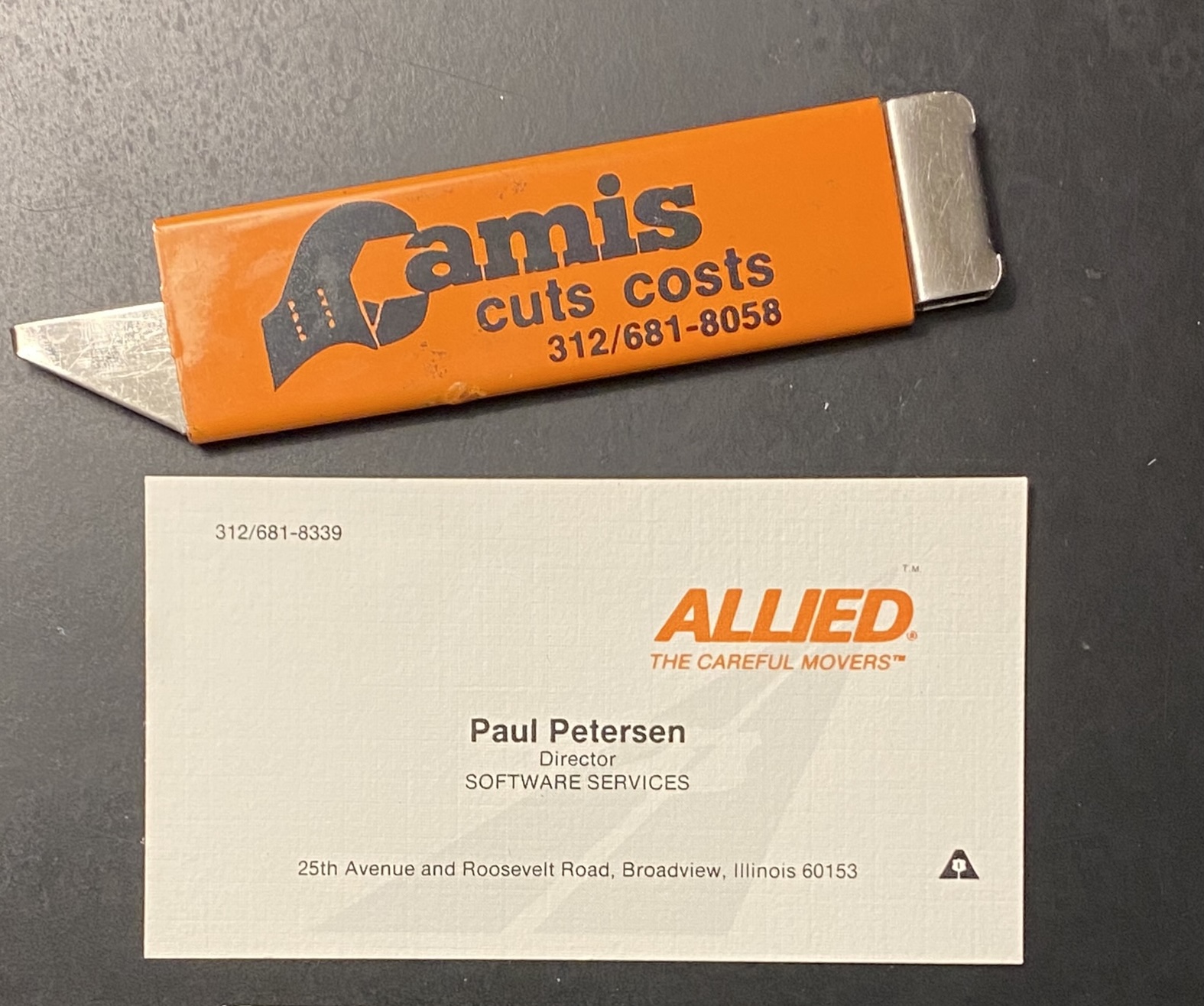
AVL was a $500 million household goods moving company. I was hired to manage all software development with computer ops reporting to another manager —a dual MiS Director.

It was an IBM 370 mainframe shop.

…. With all “jobs” being a card deck. note the diagonal line… it was there in case of a “floor sort” (I.e., it was dropped). Not very accurate. I quickly suggested that we use last 5 columns as a sequence field to be used by a sort board to arrange the cards correctly. (Cards were one line of code — based on the Hollerith system.)
The list of items needing my attention was big:
- They were spending millions each year to upgrade their mainframe and private network… as shipments grew ( but curiously not as high as processing was growing)
- The agency system they had purchased was still not ready.
- Development backlog was high and productivity rates were below standards.
- There was a backlog of reporting requests.
- And operationally we didn’t know where our trucks were.
Outside my office were some straight shooters: they knew what was going on. I tapped into that back channel to be able to test the culture. The frontline workers know what’s going on. It made my job easier as we started exposing this info so that my managers were forced to be more transparent.
What to tackle first? AT&T was the provider for the agency system. I convened a working group meeting for every Friday to review orders, coding progress, installation schedules, equipment testing and certification.
Note: meetings with all my direct reports sort of dragged— they were a bit surprised when I ended meetings early : “we finished what we had to…right?” And then I took out the guest chairs and we’d all stand: meetings after that were quick.
The meetings were tense as we had many issues to work out: including a failure of a critical comm board (SLDC) that connected to mainframe.
I took issue with one of the AT&T reps for never taking a note: in future meetings he’d make a point of clicking his pen —- fine with me.
I had them bring in an oscilloscope and we tested all day one Saturday… working a weekend? Unheard of. We ran hundreds of transactions until we found an ACK error in the firmware of the board. My style was hands on but I didn’t take over. I showed my team that I was committed: would crawl with them, stay up late, and participate.
The bigger issue was the cost of the network and mainframe from growth in data and transactions that required expensive upgrades. Shipments were up but transactions to the mainframe were up exponentially. Why?
I remembered the card deck: the deck that processed shipments and status (where were the trucks). It was run once a day — but for every shipment there were often multiple checks on shipments during the day. But the status was updated only once a day. These transactions were expensive because it required transmission up and back of the full CICS screen.
Here’s where a sales rep can be a strategic partner: and I had two:
- Jeff Severs: we had some old time att reps — but Jeff was the lead and a different mindset. He brought energy and solutions. He was direct. AT&T arranged for me to attend a strategic session at MIT where the guru of operating systems, Jack Donovan, laid out a “surround strategy” where we’d use decentralized Unix computers in the field to surround the IBM mainframe and offload some processing. We added another element: use the agency computers to capture shipping status the first time requested, save the answer locally and display it on subsequent requests during the day. Cut transactions and cpu processing and greatly reduced the number of direct connections that were required. $$$ savings huge.
- Ben Slick ( who would later hire me twice), represented TymNet: a massive dial up network ( not unlike geisco). He proposed a way to use a network of dial up instead of expensive private leased line with Motorola 9600 baud codex modems and on lease from comdisco.
Both of them talked solution (and feeds and speeds only when relevant). They were my partners: in fact, all the cool helpful ideas were theirs: my job was to test their ideas, measure their credibility, plan the adoption. My strength was never the big idea: mine was the ability to manage the execution… and add new thingsI made good ideas better.
I watched two pros help us solve a major problem. As a result, we delayed a pending cpu upgrade over two years, cut modem and network costs without hurting our Agents.

Side note: Allied held a meeting at Marriott Marquis times square… before it was fully revitalized. Jeff’s sister was coming in town and he wanted to take her to a good steakhouse and included me. I picked broadway joes on 46th. I went there to check it out, met the matre di and made reservations for the next night. When we arrived, he was off the charts hospitable: “ mr petersen, good to see you again..I have your table ready… I was beaming, my guests impressed: that guy was fantastic: made me a hero
—- now that’s sales.
Ben invited me to a bears / 49ers game in San Fran. We wore bears hats and had beer and popcorn rain down on us. Later, my daughter was with us at Ben’s wedding in Sausalito and she took her first steps… and some 28? Years later, he was at her wedding in Monterey. We golfed spyglass. a friend for life.

The network side was coming together so time to address the productivity. Issues.
Programmer productivity was harder. Each cube had four programmers and one crt on a turntable… and each cube had various start tines.
The CFO had read an article that programmers only needed a terminal 25% of day as rest of time was Coding, desk checking, etc. so he only approved one terminal per 4: but while 25% might be true, it had to be accessible throughout the day… not in continuous blocks. I had more terminals installed and poof back log starts to disappear.
I had a UNIX programmer who wanted a terminal at home so he could help with his daughter (circa 1985)… I made the case that this guy loves to code… he’ll work late: he gets flexibility, we get greater productivity and engagement. Sometimes taking a risk pays off big.
For the reports, we had a good 4gl but only one developer who was trained. This one was easy: get training for analysts in the end user departments and let them write their reports. We managed database and provided info on how data was collected. Let the end user set their priorities. We just give them the tools and understanding. I wanted a culture of service to out users — not old school control.
As to the trucks, drivers would phone in their location… but we wanted info on exact location, miles per day…I worked with a developer with gps devices. We installed in trucks and mysteriously they all broken on first trip….whoops… not happening. This would have to wait but at least we ran a prototype.
I gave speeches for tymnet, att. Looking back I wish I had been more gracious: while we had struggles with each, we all knew the goal. I feel I missed an opportunity to share the good with the challenges. It’s not that you won’t have things go bump in the night, it’s how the vendor responds that is key. Hopefully the audience saw some of that from my candid unabashed report.
In the Audience at the att event ( we had installed one of the first commercial uses of UNIX) was the CIO of McDonalds… The invisible hand brings a new opportunity. he’d heard of my work on store systems and UNIX. He referred me to a unit set up to roll out att Unix Pos systems.
I’m not sure why I left Allied… it was a great job, we did important work, and I loved the team: still see two of them. But as John Kay sings:
https://open.spotify.com/playlist/0OyrK7U8GaPW3EvqfSYQnh?si=tzEP0mSWRxCYoAHJpdyZ5g

Take Away: I’m not sure why I left: we had more to do.


 A blog by Paul Petersen
Leave a comment